2011年11月9日星期三

Interview #2

Interview #2
Eng 191
11/09/2011
Interviewer: Wenda Qian
Interviewee: Chinami Kuriki
Date of Interview: 11/08/2011


Country Report

       Chinami’s hometown is Fukuoka, it is located on Kyūshū Island, and also it is the biggest city over there. Japan is an island nation in East Asia, It has four main islands; they are Honshū, Hokkaidō, Kyūshū and Shikoku, also” Japan has the world's tenth-largest population, with over 127 million people. The Greater Tokyo Area, which includes the de facto capital city of Tokyo and several surrounding prefectures, is the largest metropolitan area in the world, with over 30 million residents."
           
          Japan is a major economic power in the world, after the Second World War, Japan got very poor as a loser in the war. However, Japan's economic growth very fast from the 1960s to the 1980s has been called the Japanese post-war economic miracle. Japan developed fast because The Vietnam War and the Marshell plan. Also, Japan's auto-mobile industry and electronic industry are very advanced. This is why Japan revives so quickly. The other important reason is that Japanese government focus on education, thus even under the poor situation after war, Japanese children still had a good study condition.
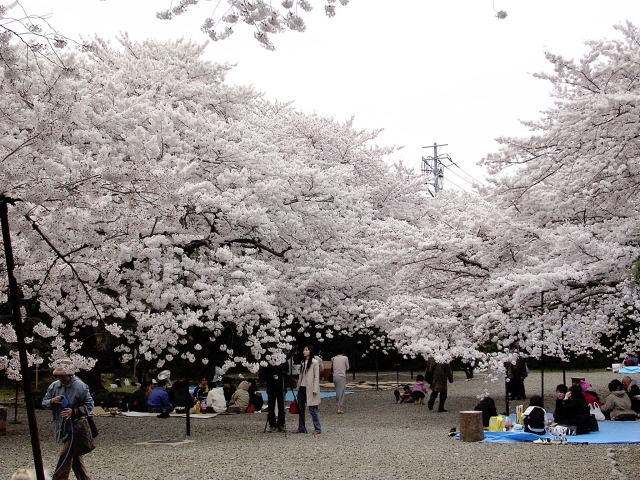
     Japan is not a big country, but climate varies greatly from north to south. "Japan's geographical features divide it into six principal climatic zones: Hokkaidō, Sea of Japan, Central Highland, Seto Inland Sea, Pacific Ocean, and Ryūkyū Islands."   Sakura (cherry blossom) is a famous flower in Japan, like Fiji mount and Ninja, Sakura is a representative of Japan, it is getting ripen on July. Every year, most tourists come to Japan to enjoy the beautiful Sakura. Mount Fuji is the highest mountain in Japan. It is also the representative of Japan. There are many viewer and climber go to the mount every year. "It is one of Japan's "Three Holy Mountains" along with Mount Tate and Mount Haku."


     Japanese food is poplar over the world; I remember my first interviewee said that food makes him proud of his country, I can understand, because many people like Japanese food. In my hometown, there are many Japanese restaurants. The typical Japanese meal consists of a bowl of rice (gohan), a bowl of miso soup (miso shiru), pickled vegetables (tsukemono) and fish or meat. While rice is the staple food, several kinds of noodles (udon, soba and ramen) are cheap and very popular for light meals. As an island nation, the Japanese take great pride in their seafood. A wide variety of fish, squid, octopus, eel, and shellfish appear in all kinds of dishes from sushi to tempura.


Preparation of the Interview
For the second interview, I planned to interview my friend LuLu’s Japanese friend, but for some reasons, she didn’t reply my request. Fortunately, my other friend Wang introduced a Japanese girl to me, her name is Chinami Kuriki, and she also lives in Lawrence Hall. We make an appointment that interview would happen on two pm. However, she did show up on time, I tried to knock her door, and then her roommate told me that she is not there. After a while, Wang come to my room and told me that Chinami is very busy, so the interview will happen on ten pm.
On ten o’clock, I went to the second floor of Lawrence Hall, she was waiting for me. Chinami is a cute girl; we shaked hands and then introduced each other. We decided to take the interview at the lounge on the second floor. Before the interview begun, I showed her the questions, she nicely accepted all questions. She apologized that she was late in the afternoon. Her attitude was better than my first interviewee, she liked to talk and gived me many ideas about Japan. Perhaps because she is cute girl, I really enjoyed this interview. I recorded this interview by my smart phone, it almost took 30 minutes; I didn’t know we can talk so long. After interview, we have a short talk about Chinese words. As a Japanese, Chinami can figure out many Chinese words, because these word are same in Japanese. In a way, China and Japan have some similar culture. 


Interview #2


Interviewer: Wenda Qian
Interviewee: Chinami Kuriki
Place: Lawrence Hall 2rd floor, lounge.


Wenda Qian: ok, let’s get start. My first question is what is your name?
Chinami Kuriki: My name is Chinami Kuriki, C-H-I-N-A-M-I K-U-R-I-K-I.
Wenda Qian: It is very complicated…
Chinami Kuriki: it is simple to Japanese name.
Wenda Qian: The second question is where do you come from?
Chinami Kuriki: Japan.
Wenda Qian: I know that, I mean which part of Japan?
Chinami Kuriki: Fukuoka, it is in the south of Japan. The city name is Kurume.
Wenda Qian: Can you tell me about the education system of Japan?
Chinami Kuriki: You mean how many years in elementary school……?
Wenda Qian: Just like how many years you spent in each schools?
Chinami Kuriki: Ok, six years for elementary school, three years for middle school, three years for high school, and four years for most college.
Wenda Qian: Uh…what is the form of government in Japan?
Chinami Kuriki: Form? How can I explain it?
Wenda Qian: Like how many parties Japan has?
Chinami Kuriki: I think there are many.
Wenda Qian: How many? What is the most powerful one?
Chinami Kuriki: Uh…two are very power, one is Democratic Party and the other one is Liberal Democratic Party. Now Democratic Party takes Japan. The party will change in two or three years.
Wenda Qian: Good, next one is to tell me one thing that makes you pound of your country?
Chinami Kuriki: Uh…Everything is OK?
Wenda Qian: Yeah, everything is OK.
Chinami Kuriki: I think is food.
Wenda Qian: Food?
Chinami Kuriki: healthy and delicious.
Wenda Qian: I like Japanese food, too. There are many Japanese restaurants in my hometown. Next, what place you would recommend to tourists?
Chinami Kuriki: Uh….How many?
Wenda Qian: It matters nothing, you can say as much as you like.
Chinami Kuriki: I think is Kyoto, because there are many traditional building, It is kind of middle of Japan, many foreigners like to visit Kyoto. Kyoto was a capital city in Japan.
Wenda Qian: What about Houshu?
Chinami Kuriki: Houshu is just an island.
Wenda Qian: Very good, what festivals do you celebrate?
Chinami Kuriki: I think the biggest one is New Year, January 1st. In my hometown, we eat some special food for celebration.
Wenda Qian: Special food?
Chinami Kuriki: Osechi, there are many food within it.
Wenda Qian: Ok, what is weather like in your hometown?
Chinami Kuriki: Very humid, in the southern Japan, so the weather is high humid.
Wenda Qian: What is type of sport in your country?
Chinami Kuriki: Baseball and soccer, we also have karate.
Wenda Qian: what will you do?
Wenda Qian: what is traditional food in your country?

Chinami Kuriki: Sushi and sashimi, lisecake.

Wenda Qian: So, what do most women do after they get married in Japan?
Chinami Kuriki: In the past, most women stay at home and do housework. But now, it has changed, many women still work after marriage.
Chinami Kuriki: I hope I will work.
Wenda Qian: What about your mother?
Chinami Kuriki: My mother is a teacher in elementary school.
Wenda Qian: What is your major?
Chinami Kuriki: My major is communication study.
Wenda Qian: Why you select this major?
Chinami Kuriki: Because I am interest in other culture and different view point.
Wenda Qian: What reason takes you to America?
Chinami Kuriki: Uh….firstly, I want to improve my English, secondly, I want learn different culture and different values. If I am in Japan, I would have so many chances.
Wenda Qian: Would you like to find a job on campus?
Chinami Kuriki: No! Because I am just an exchange student, I will only have one year in America, so I focus more on studying.
Wenda Qian: That is sad to me. Uh...how many children does each family usually have in your hometown?
Chinami Kuriki: Now I think avenge is two for each.
Wenda Qian: Do you have sister or brother?
Chinami Kuriki: Uh..I have a younger brother.
Wenda Qian: How old are people in your country by the time they got married?
Chinami Kuriki: Uh, I think is from 25 to 30.
Wenda Qian: Do you have any plans about marriage?
Chinami Kuriki: HAHA…..maybe three years after graduate from college, then I want to get a marrage.
Wenda Qian: That is a good plan, what is the relationship between you and your American roommate?
Chinami Kuriki: It is quite good, really good. We respect each other, sometime; we have different lifestyle, I will tell her what I think, like “can I sleep? Or can I wake up ”, just take care of each other. Keep the room clear. I think that is it.
Wenda Qian: It is enough, what is the most difficult problem you have faced after you came here?
Chinami Kuriki: To follow the class, because my English sill is not enough. I can’t come up with many ideas. Ok, for example: in Japan, the bus comes on time, but in America, the bus is often late. The most difficult problem is still English problem.
Wenda Qian: So do I, I think English is a problem to international student. Ok, the last question, what is your plan after graduation?
Chinami Kuriki: after I graduate from Japanese university?
Wenda Qian: Uh. Yeah!
Chinami Kuriki: I want to concern for students, I will go abroad. I want to help poor students.
Wenda Qian: Cool! How many years remaining in you college life?
Chinami Kuriki: This is my third year, so I still have one year left after I leave America.
Wenda Qian: Thank you very much for your help! You really make me enjoy this interview.
Chinami Kuriki: You are welcome.


Personal review

This is my second interview. This time, I recorded the talking by my smart cell phone. So I can clearly write down the information. Chinami is very easy-going, I felt a little bit shy at the beginning. She makes me comfortable and relaxes. It is hard to make appointment with unknown people. This time, I am luck because we all live in Lawrence Hall, Chinami’s answer is good and detail, compare the first one, I think I have done better. But there are some special Japanese words I feel confuse, it is complicated spelling. In the first interview, I didn’t make jetia answer me too much, but Chinami is patient, she happily answer me every question I asked him, so it made the interview clear. I have learned more about the Japanese culture. I also fix some mistakes from the first one, like how to set the resource of picture. In order to make the interview fluency, I skip some unimportant information from the talking.

2011年11月3日星期四

2011年10月26日星期三

Interview #1

Eng 191
10/26/2009
Interviewer: Wenda Qian
Interviewee: Jeita Takahashi
Date of Interview: 10/25/2011


Country Report

       Jeita's home is in north part of Japan, he didn't tell me too much about his hometown. Japan is an island nation in East AsiaMy hometown is China, both countries are close. So, we have some similar culture, for example: we have some same words and traditions. In Tang dynasty, Japanese government sent many people to China for learning new skills. Thus, China and Japan had a good relationship in the past.
http://upload.wikimedia.org/wikipedia/commons/thumb/b/bc/Regions_and_Prefectures_of_Japan_2.svg/500px-Regions_and_Prefectures_of_Japan_2.svg.png
      Japan has four major islands, they are Honshū, Hokkaidō, Kyūshū and Shikoku, also "Japan has the world's tenth-largest population, with over 127 million people. The Greater Tokyo Area, which includes the de facto capital city of Tokyo and several surrounding prefectures, is the largest metropolitan area in the world, with over 30 million residents."
           
          Japan is a major economic power in the world, after the second world war, Japan got very poor as a loser in the war. However, Japan's economic growth very fast from the 1960s to the 1980s has been called the Japanese post-war economic miracle. Japan developed fast because The Vietnam War and the Marshell plan. Also, Japan's auto-mobile industryl and electronic industry are very advanced. This is why Japan revive so quickily. 
     Japan is not a big country, but climate varies greatly from north to south. "Japan's geographical features divide it into six principal climatic zones: Hokkaidō, Sea of Japan, Central Highland, Seto Inland Sea, Pacific Ocean, and Ryūkyū Islands."     

  Mount Fuji is the highest mountain in Japan . it is also the representive of japan. There are many viewer and climber go to the mount. "It is one of Japan's "Three Holy Mountains" along with Mount Tate and Mount Haku."


Preparation of the Interview

       I live in Lawrence Hall, so I have many chances to meet international student. Each international student has to share the room with American student. So I have to ask someone who live in the other room for my interview. After considering, I decided to interview a Japanese student. He is my friend’s friend, and he is tall and strong. Before the interview, I didn't know him too much; I only knew his name is Jeita. He lives in room 304. Besides, I didn’t know how to tell him, and then my friend told him about the interview, he happily accepted my request. I was nervous, because this was my first time to make an interview. We started the interview in the lounge at 3rd floor. He lives in the north part of Japan, so I asked him about the earthquake happened in Japan last year, he said that his house was shaking very strongly at that time, but he didn’t fear, because earthquake happens frequently in Japan, luckily there is no people got hurt in this event. I showed him the questions I am going to ask; he just checked some and agreed to answer my question. Jeita is a new student in St Cloud state university; also he is an exchange student from Akita University. His English is not too good, he can’t understand the fourth and fifth question, and the answers were all very short. Jeita is easy-going, I relieved the tension. The interview almost took 20 minutes, everything went good. We shake hands after interview. By the way, I have got a new international friend. Our rooms are pretty close, my room number is 302. We will have more time to understand each other and share cultural experience.


Interview

Interviewer: Wenda Qian
Interviewee: Jeita Takahashi
Place: Lawrence Hall 3rd floor, lounge.


Wenda Qian: let us get start. First one, what is your name?
Jeita Takahashi: I am Jeita, full name is Jeita Takahashi
Wenda Qian: Where are you from? Which part?
Jeita Takahashi: Japan, northern part.
Wenda Qian: Please describe the education system of your country.
Wenda Qian: Ok, just like when did you go to elementary school? Or how long you spent in school before university?
Jeita Takahashi: I see, I started to go to elementary school at 7 years old, 6 years in elementary school, 3 years in middle school, 3 years in high school, 4 years in university.
Wenda Qian: How has your culture influenced your people/family values?
Jeita Takahashi: Eh…Sorry, I don’t know.
Wenda Qian: What is the form of government in your country?
Jeita Takahashi: I don’t understand this one; but I think is same as America.
Wenda Qian: Tell me one thing that makes you proud of your country?
Jeita Takahashi: Animation
Wenda Qian: What places /sites would you recommend to tourists?
Jeita Takahashi: Akita.
Wenda Qian: Where is it?
Jeita Takahashi: It is in Honshu.
Wenda Qian: What festivals do you celebrate in your country?
Jeita Takahashi: Fantou Festival.
Wenda Qian: What's the weather like in your hometown?
Jeita Takahashi: Cold, a little bit warmer than MN.
Wenda Qian: What is a type of sport in your country?
Jeita Takahashi: What is a type of sport?
Wenda Qian: Ok, just like what sport do most Japanese children like?
Jeita Takahashi: Baseball. Many Japanese children like to play baseball after school.
Wenda Qian: What's a traditional food in your country?
Jeita Takahashi: Sushi.
Wenda Qian: Yeah, I guess so. What do most women do after they get married in your country? (house wife, working?)
Jeita Takahashi: Stay at home, but it is changing. More and more women find job.
Wenda Qian: It is same in China, and what is your major?
Jeita Takahashi: Linguistics
Wenda Qian: Ok, next. What reason takes you to America?
Jeita Takahashi: I am here to study English.
Wenda Qian: Would you like to find a job on campus?
Jeita Takahashi: Yeah, whatever job. But I will try to find one.
Wenda Qian: How many children does each family usually have in Japan?
Jeita Takahashi: One or two.
Wenda Qian: Do you have brother or sister?
Jeita Takahashi: Yeah, I have an old sister.
Wenda Qian: How old are people in your country by the time they got married?
Jeita Takahashi: 26-27 years old.
Wenda Qian: What about you?
Jeita Takahashi: Uh…I don’t know, probably 28 years old.
Wenda Qian: What is the relationship between you and your American roommate?
Jeita Takahashi: Good.
Wenda Qian: What is the most difficult problem you faced after you came here?
Jeita Takahashi: I think is English, the language problem.
Wenda Qian: What is your plan after you graduate from SCSU?
Jeita Takahashi: I will leave America, to become an English teacher. I probably won’t go back to Japan. I will find a job in somewhere else.


Personal review
        For my first interview, I conclude two points I have to improve: 1, I should find an interviewee my own instead of get help from my friend. 2. I should make more communication with interviewee. One thing which disappoints me is about the interviewee, Jeita answered every question very short, and I don’t know how to organize them into my paper. Thus I will make more talking with the interviewee next time, try to make everything more detail.
       There is another important reason I choose to interview Japanese student, because I wonder how they deal with earthquake problems. As we all know, there was a great earthquake happened in Japan last year. And I am interest in their culture, even Japan is close China, there are still many different and interesting cultures I didn’t know. Actually, many Chinese people don’t like Japanese, because Japanese army killed too many innocent people in Second World War, however this opinion is changing, more and more Chinese people are accepting Japanese people and Japanese production.
        Accord to this interview, I got many new ideas. Interview is a kind of communicational skill; we should learn how to talk with strange person. I think it is also a social skill. This experience will make me better in the next one.

2011年10月20日星期四

Reference and Facts

Reference and Facts
1.     Have you ever needed to know the?
  • Population of a city?
  • Major achievements of a famous individual?
  • Definition or a term or phrase in an unfamiliar subject?
  • Date of an important event?
2.     These types of questions are best answered by reference sources, which provide quick, factual information on a topic. There are many types of reference sources. For example,
  • Dictionaries contain definitions of terms.
  • Encyclopedias contain concise, factual information on topics or concepts.
  • Handbooks contain practical information (e.g., how to do something) on a topic.
  • Almanacs contain calendars, basic facts, and statistical information relating to people, places, and events.
  • Biographical sources contain biographical information on individuals such as birth and death dates and major achievements.

3. Why use reference sources?

Reference sources are often the best place to start your research because they:
  • Provide a good introduction to a topic.
  • Provide brief, factual information.
  • Summarize and clarify issues.
  • Define unfamiliar terms.
  • Identify additional relevant sources such as books and periodical articles.
That will make our paper be reliable, more informative, unbiased and broad. It is good for back ground information on topics.

4. How can you find reference sources or cite the reference?

There are several different ways to find reference sources on your topic:
1.     We can search on-line to find the reference on web-site.
2.     We can go to library to find books, journals or magazines, probably, to ask help at Help Desk. 
 

2011年10月6日星期四

Interview questions

1. What is your name? (first, I need to know his/her name,it will help me call him/her easily when I ask him/her question.)

2. Where do you come from? (Because the interviewees are all international students, I would like to know where they are from.)

3. What is the first language in your country? (For these international student, I hope to know what language they are speaking. Also, I can learn more knowledge.)

4. When did you start to learn English? (The most hard problem international students face is language problem, I hope to know what is the English teaching policy in their country.)

5. When do you come to America? (I wonder how long they have been in America, then I can start to talk about American life.)

6. what reason brings you to America? (It is a challenge when a person studies and lives in the other country, I wonder what makes them here.)

7. Why do you select SCSU? (Our school is not too famous, but it is still very good, I wonder the main reason they come to SCSU.)

8. How is American/school life? (For an international student, how to live with American roommate is a problem, because of cultural difference. And I wonder how they spend their time in the school.)

9. what is your major?(I am interest in what their major is, and why they select this major.)

10. How do you think about America before you came here?(For an international student, America is a different place, many people should have their own imagination about the US.)

11. Can you tell me the most interesting story you got after you came to the U.S?(Everybody have the special story, I am interest in what it is.)

12. Are there many difference between your country and the U.S? (Every country has its own culture, I like to learn new culture, I wonder how they handle these cultural problem.)

13. what is your plan after you graduate from SCSU? (I wonder they will stay in America or go back home after graduation. It is problem for international students.)

14. Do you like to find a job on campus? (Work experience is very important to a student who studies in America. There are many international students work on campus.)

15. Does your school allow you to have boy or girl friend in your country? (I am interest in this topic, because in China, school and parents will never let kids have boy or girl friend before college.)

16. what is the president in your country? Do you like him/her? (I know there are many people are dissatisfied with their leader, I wonder who is their leader and how they think about their leader.)

17. Are there many religions in your country? (I think every country has religions, I am interest in what religion they have in their religion, for many Chinese people, they don't have religion. But few do.)

18. what is the most popular sport in your country? (I like sport very much, I wonder what sport they like to do in their country.)

19. Do women have the equal right as men? (In many old culture, men were higher than women, even now. And every country has different tradition.)

20. What is the best food in your country? (For Chinese culture, food is really important. I think, food represents a special culture in a country. In addition, I am very interest in good food.)